
De Soto Area School District
Home of the Pirates!

An operating referendum is a vote that lets our community decide if our schools can get more money to help with everyday costs, like paying teachers, keeping schools safe, running buses, and supporting student programs. This money helps with three main things:
School Safety - Keeping students and staff safe
Student Support - Helping every student learn and grow
Recruiting and Keeping Great Staff - Making sure we have the best teachers and support staff
This is different from a capital referendum, which pays for big construction projects, like new buildings or major repairs.
An operating referendum keeps schools running strong every day
Question: Shall the De Soto Area School District, Vernon and Crawford Counties, Wisconsin be authorized to exceed the revenue limit specified in Section 121.91, Wisconsin Statutes, by $500,000 for the 2026-2027 school year, by $1,400,000 for the 2027-2028 school year and by $1,700,000 for the 2028-2029 school year, for non-recurring purposes consisting of maintaining facilities, instructional programs, student services and updating security and network technology systems?
The De Soto Area School District is experiencing increasing costs in areas, such as transportation, utilities, insurance, technology, security and safety requirements and student services. At the same time, we are receiving less federal funding and state aid.
Moreover, the state also limits the amount of money available to our schools from state aid and local property taxes. State funding levels used to increase with inflation, but the state ended that in 2009. If that had continued De Soto would have more than $1.7 million in additional funds this year ($3,573 more per student, based on our enrollment for the 2025-2026 school year).
Two other factors are the state not keeping its promise to fund special education at a rate of 42% and the private voucher program which siphons roughly $230,000 from our school revenue which places a direct tax on the De Soto School District residents.
Like school enrollment in 68 out of 72 Wisconsin counties in the last fifteen years, De Soto's is declining. Less students equates to less revenue. Because the decline of students is spread over all grade levels and areas within the district, the opportunities for savings in staffing and transportation are minimal. We still need a teacher in every classroom, quality curriculum, warm, safe and secure buildings and bus routes that reach all corners of the school district.
Cuts may have to be made to a number of programs across the district. While the District does not endorse any of the following, we must consider all options to reduce expenses:
Reducing the number of teachers / increasing class sizes
Reducing college credit and elective course offerings
Reduce learning support systems
Reduce Athletic/Co-Curricular offerings
Delaying security and technology updates
Reduce annual facility maintenance budget
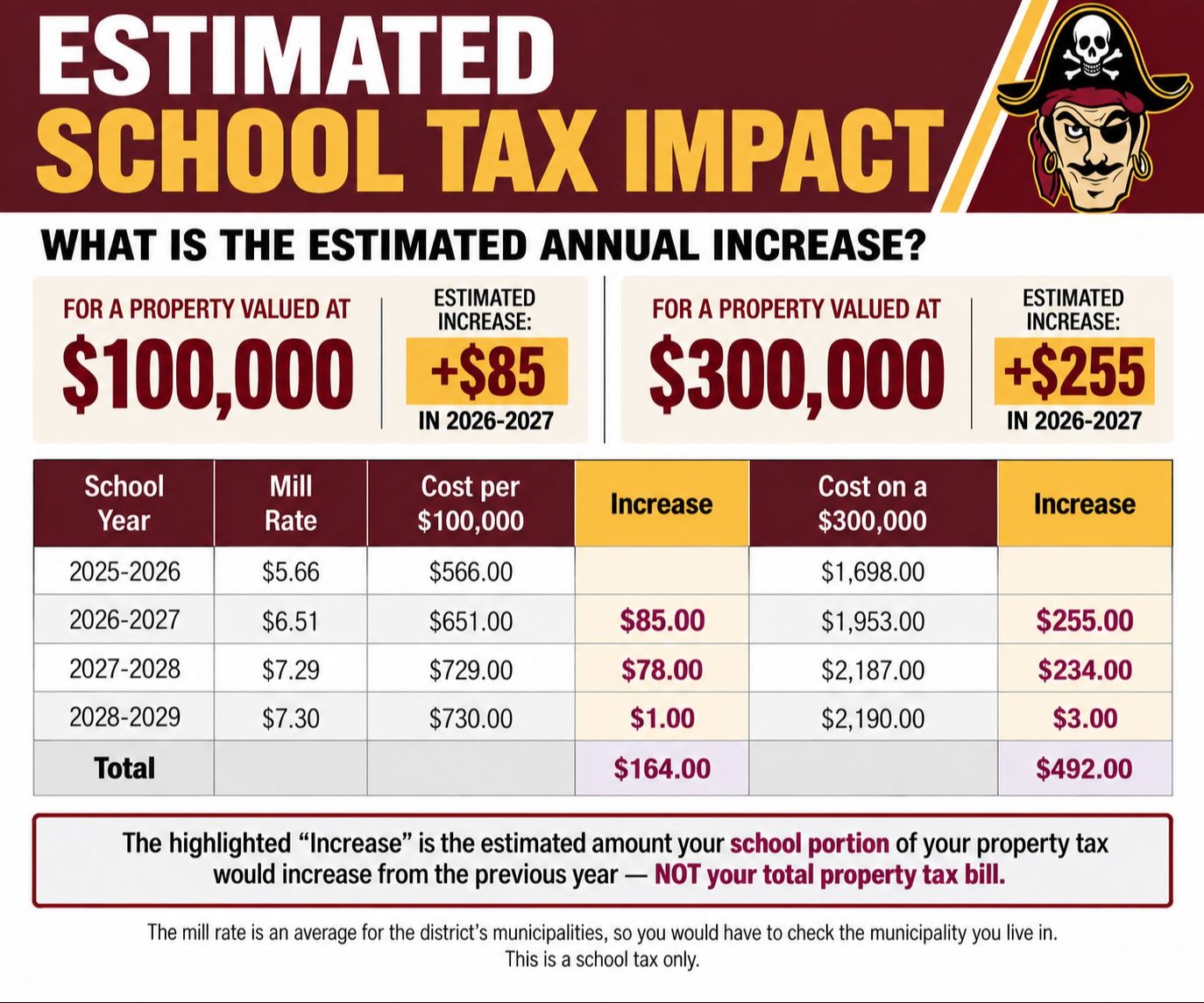
We look forward to providing you with more information and answering your questions.